Hip Hop MD Maynard Okereke interviews Dr. Baratunde Cola, founder and CEO of Carbice. Together, they discuss nanotechnology and the way it is revolutionizing technology.
Maynard: Do you know there are more carbon nanotubes in space than there are stars in our galaxy?
Stay tuned for more.
Hey everyone, and welcome to XSTEM All Access. I'm Maynard Okereke, and I'm excited to be part of this series showcasing some of the coolest minds in STEM.
As your host for this episode, I am excited to chat with Dr. Baratunde Cola. Not many people can say they went from playing SEC football to earning degrees in mechanical engineering and nanotechnology and ultimately founding an innovative company that is using carbon nanotubes to solve some of the world's most critical engineering challenges. Yet, that's exactly what our guest today has done.
Baratunde, welcome and thank you so much for joining us today.
Bara: Hey Maynard, I'm happy to be here. I have a long history with the Science Festival. I actually attended the very first one on the National Mall a long time ago.
I always enjoy sharing what I do, what I'm excited about with people, especially young people. I'm going to talk a little bit about how an ex-football player in the SEC at Vanderbilt got into nanotubes and became a nanotechnologist.
Maynard: Okay, let's start at the beginning. For those of us who may not be familiar with your field. What is nanotechnology and more specifically, what are carbon nanotubes?
Bara: Carbon nanotubes and nanotechnology really go hand in hand. Nanotechnology as a field became exciting when the carbon nanotube was discovered.
When you think about nanotechnology, it's really what happens differently with physics and chemistry when things get really, really small and things happen that are pretty magical.
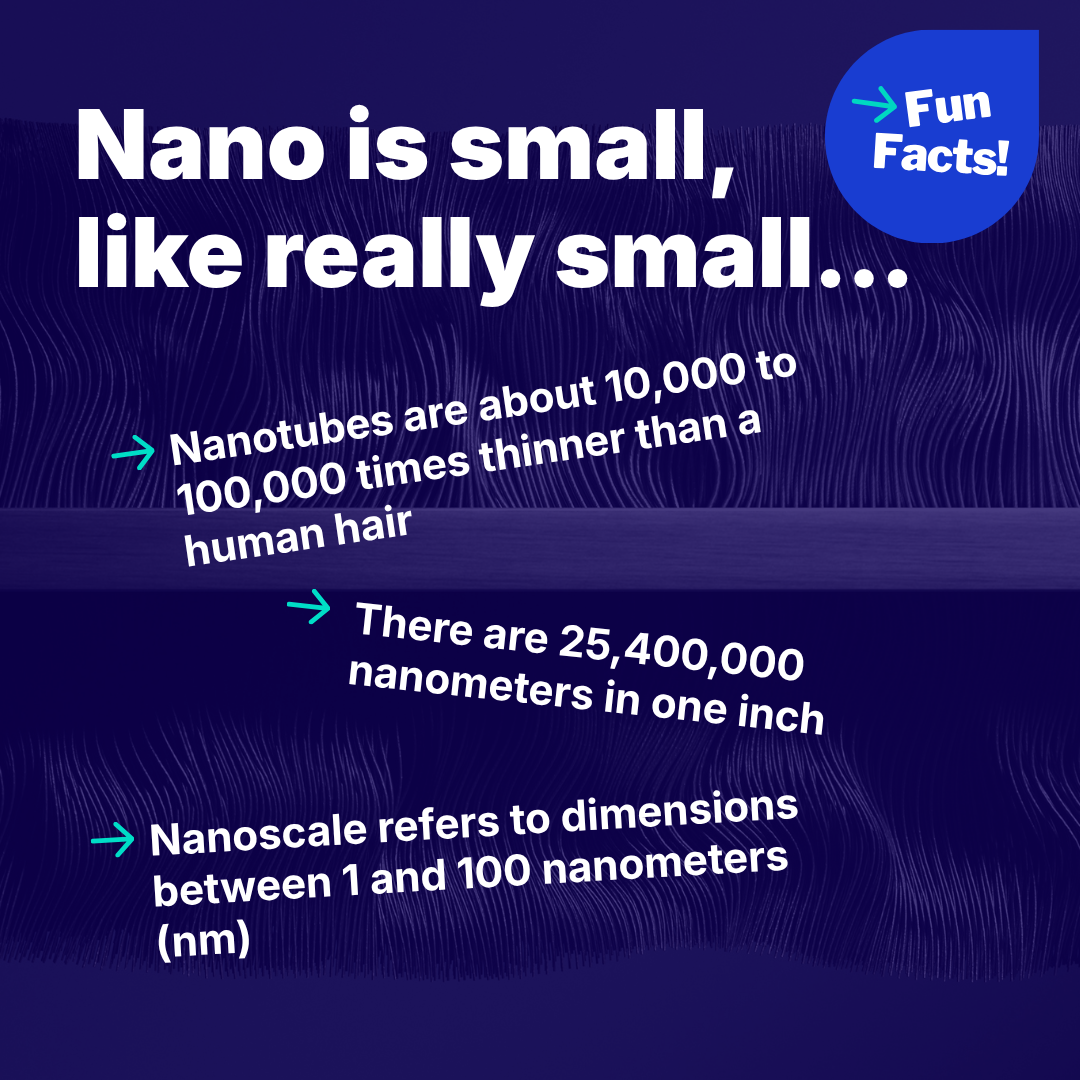
And so this carbon nanotube, at its finest dimension, can be 10,000 times smaller than the human hair, or maybe just 100 atoms in diameter, has really fantastic properties as a result.
If you think about the carbon nanotube, it's a bunch of atoms that look like chicken wire fencing rolled up in a cylinder. And these atoms are so pristine and well aligned at that scale that they can conduct heat better than anything. They can conduct electricity faster than anything. 10 times stronger than steel.
And so that's really what nanotechnology is. It's making things so small where the physics changes in an advantageous way that gives us new properties that we can use for new applications and new solutions to problems.
Maynard: This is why I love science.
One might assume that shrinking something down to even the atomic level would just make a miniature version of the exact same thing. But when you get this small, and we're talking 10 times smaller than a human hair, the physics and chemistry actually change, giving us nanomaterial with extraordinary properties.
That's just absolutely incredible. But you mentioned that carbon nanotubes are exceptional at conducting heat. Being that heat is a major challenge in modern technology, from phones and spacecrafts to AI data centers and computers, can you tell us what happens when we don't control heat?
Bara: Controlling heat is a major challenge. because things need to operate within reasonable temperature zones to function properly just like the human body or if you're outside in the summer high humidity if you overheat then that can be fatal same thing is true for all electronic systems that material properties they will degrade if they get too hot electricity won't flow like it needs to if it's too hot things won't stay together.
So managing heat is a vital part of modern society. And the problem or the challenge with managing heat is made really complex because things are assemblies of a lot of different stuff.
And the different things that you put together, they expand and they shrink at different rates. So there's a lot of stress and mechanical issues that happen as a result of heat.
And so everybody uses electronics every day. You have cell phones, you're on social media, you send emails, you're using the internet. And all of these devices are within systems that need to get the heat out of the electronics.
And so at its most fundamental level, when electronics do work, the natural byproduct is heat. So the more electrified the world gets, the more we're going to have to deal with this heat problem.
Maynard: We've all been there when our smartphone tells us it's too hot for use. But hearing your explanation, I have a much better appreciation for what's actually happening inside my phone and why heat management is so critical with regards to electronic devices.
Your company, Carbice, develops technologies that help control heat. What makes carbon nanotubes so good at solving this problem?
Bara: Carbon nanotubes are particularly good at solving heat problems. Because at the heart of heat problems are mechanical problems.
And so the carbon nanotube is able to move heat from one surface to another, even if the two surfaces are different, if they're not aligned well, they expand and contract at different rates.
These little nanotube fibers that look like lined up vertical curly fries that can expand and compress like springs have the ability to keep everything together so the heat transfers.
A perfect analogy is just thinking about standing next to a giant ice block. You'll feel cold, but you'll feel much colder if you put your hand on the ice block and touch it.
And that's really what the nanotubes do is that they create this almost perfect glove hand to touch two things together to be able to move the heat.
And that's important because, you know, these things that generate heat like electronics and semiconductors are not doing it in isolation. They're within your phone, your computer at home, your car. So they're in systems.
That means in order to get the heat out, you have to have a lot of close glove hand contact to pass it from one thing to the next.
And that's really where the carbon nanotubes excel is that they allow you to make that contact in the best way, and to keep it despite how much vibration or stress tries to separate it.
Maynard: Okay, that is simply phenomenal. And it gives us a great baseline to build so many unique connections.
So I'm curious, where do we see this kind of technology in real life? Perhaps in places people would be surprised to know of, maybe not even realize.
Bara: So, carbon nanotube technology is everywhere. There are probably... 100 satellites orbiting Earth over the past half decade that have nanotubes holding the electronics in those satellites to their heat sink so that they operate functionally.
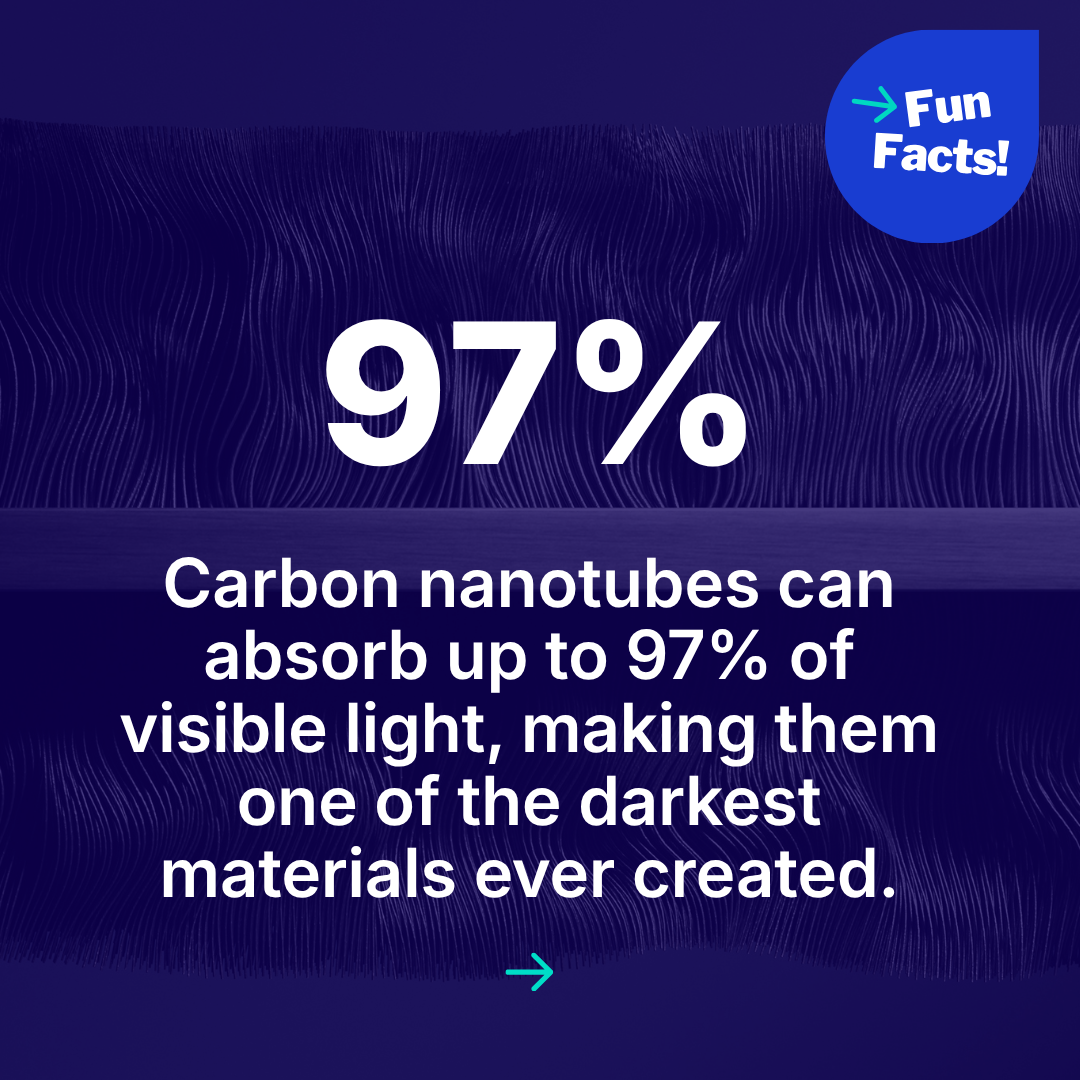
A fun fact around that, there's at this point more nanotubes in space than stars in our galaxy because they're really tiny.
The other thing is that you can go to your local store now. MicroCenter is selling these carbon nanotube pads that are used for thermal interfaces, to kind of tell the technical term, but they're sold with AMD CPUs for gamers inside of computers for people that want you know constant uptime with gaming. They're in all places that you can be because I think once things are in space, you know they're kind of beamed down to earth and surrounding us all so it's affecting everything.
If you use Sirius XM satellite radio, it’s powered by Carbice. A lot of the surface locating capabilities from space are powered by Carbice, so most people who are probably watching me speak now, in some way, you might already be a carbon nanotube user.
Maynard: I would agree with you. We are all carbon nanotube users. And how mind-blowing is it to think that there are more carbon nanotubes in space than there are stars in our galaxy? That fact literally blows my mind.
Baratunde, you have a PhD in mechanical engineering, but your work spans nanotechnology, material science, electronics, and entrepreneurship. When we think about creating technology to solve real-world problems, how critical is it for diverse fields like these to all come together?
Bara: The interesting thing about the PhD is that when you get to that level of education, first of all, you've been in school way too long. Second, the discipline focus really isn't as important as the curiosity and the execution of discovery.
For the first time for many people, really, really learning how to learn something.
And for me, even though I'm a mechanical engineer in my undergrad master's training, the PhD was an opportunity for me to focus on a topic.
And when you focus on a topic like nanotechnology, carbon nanotubes, you learn everything you can about it. So part of that is learning about materials, learning about chemistry, learning about equipment.
I built equipment to grow nanotubes. doing stuff that you probably would do in a machine shop or auto body shop.
That's one of the things that people don't say a lot about the PhD and why for me it was a very fulfilling activity and experience in my life is because it was a focus on becoming an expert in a particular topic in gaining whatever skills you need to become that expert.
So I really think that inherently in nanotechnology, is an interdisciplinary effect because when you start working to build things, but you've got to build them with atoms and things that are small, you're going to run into chemistry, you're going to run into physics, you're going to run into math, and you're going to be doing all types of engineering.
And that's life. I mean, the reality is life is not disciplinary. Life is inherently multidisciplinary.
If you really are curious and you like technology and you want to create a skill set to be able to do things of value in a unique way, you're going to run into all types of disciplines.
Maynard: I just love that perspective. Life is multidisciplinary, and that's what makes learning so much fun.
But I want to know, as technologies like artificial intelligence and supercomputers continue to evolve, what career opportunities exist in your field for students with different levels of education and training?
Bara: There will always be opportunities to build and be creative and contribute to the activity of making real stuff.
So, for example, people with high school education come in and they run equipment to make the nanotubes. They can process the material. They can do quality control. They can do cutting, packaging. They can go into the lab and they can collect data.
College education and engineering, chemistry, things like that, maybe they're working in product development, or running experiments.
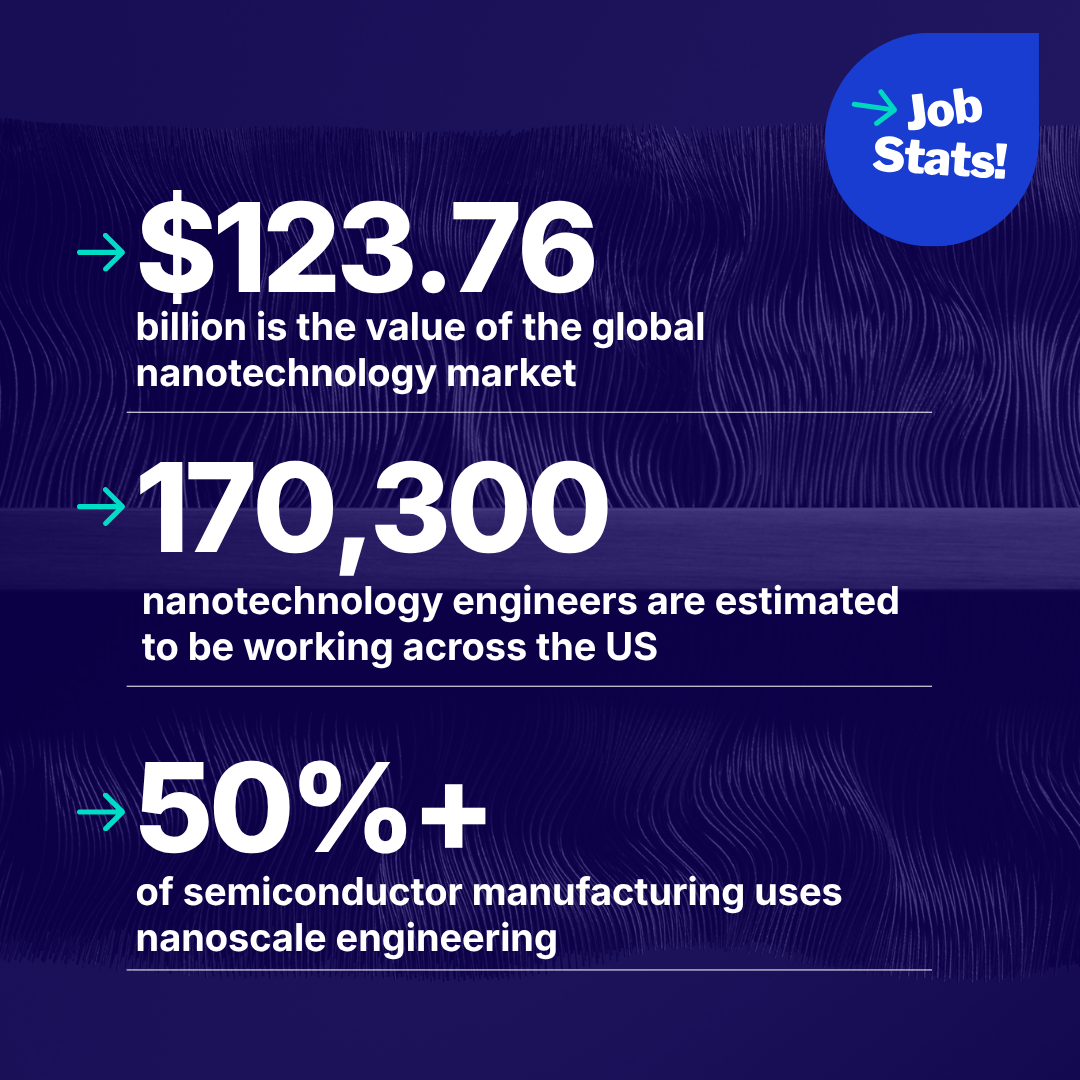
At the highest levels, they're selling and there's marketing and positioning the business. So you don't even have to have a technical background to be important in my space.
You could be someone that just understands the impact. Because at the end of the day, you can make a technology, you can develop science, but what moves the world are the impacts created from it, the results.
And the results are things that everybody can appreciate, and there needs to be people to communicate that.
So I love what I do because in building the company that I run, Carbice, we do employ people from all different backgrounds and educational levels, and they have important roles, and it's a team effort where you see it all come together.
Maynard: That is a really important point for students. There's room for people at many different educational levels and in both technical and non-technical roles. And all of those roles make a big impact, which I agree is ultimately what innovation is all about.
Speaking of which, what excites you most about the future of this technology? If we fast forward 10 or 20 years, how might this technology evolve or be used in different ways?
Bara: I'm excited the most about the technology we work on at Carbice because the human experience is one that is fraught with things that delay your goals, that waste your time, that create barriers to you moving forward with ambitious ideas.
And at the end of the day, the fundamental thing that we work on is creating one less thing to worry about.
When you solve interface problems and heat problems, you allow people to build better systems faster. You allow people to work more efficiently on a production line.
And I'm excited about a future where when people decide to do things collectively and individually, that they can do it at high efficiency so that there's more value in their time spent on things so that they can spend time doing other things.
I'm a big believer that the advancement of technology is not for technology itself, but it's to improve the human experience.
And as far as that may sound, connecting nanotubes to the human experience, that's really how the world has progressed.
And I really believe that what we work on in making things work more efficiently, be more sustainable, last longer, easier to make, more reliable, more consistent from lab to production, all of those things, the result is an effect on the human life.
And everybody can relate to the fact that if they have one thing less to worry about in their life, their life will be better. They could focus on things that they care about more.
So I have a very human forward, future focus, because I think once you move a lot of distractions out of the way of people, people do great things.
Maynard: Yes, and your work with carbon nanotubes is definitely helping improve the human experience.
Baratunde, thank you so much for joining us today. I am amazed that something only a few atoms wide can improve everything from smartphones to spacecrafts. And it's been truly fascinating to hear about your work, and I wish you the absolute best moving forward. Thank you.
Bara: I want to thank you, Maynard, for the conversation today. I really enjoyed being here, the opportunity to... Share a little bit about what I care about with the students.
And to the students, don't let things like nanotechnology be intimidating or just be something that you're excited about. Dive into it. Be curious about it.
There is a room in nano, or room at the bottom as people say, for everyone. And there's a bright future ahead for us working on technologies like this to help people live a better life, a more comfortable life, and do bigger things.
Maynard: Students do not miss the career resources on our website to further explore fields like advanced manufacturing microelectronics engineering robotics and so much more you'll find opportunities to dive deeper into each area and a playlist of career shorts highlighting in-demand careers.
Make sure to subscribe to the youtube channel in the description below And follow us on social media to get updates about new episodes. Trust me, you do not want to miss any of them.
Plus, you'll get access to fun weekly content for students and teachers. And don't forget to check out the full library of episodes available on demand right here.
Each one has a Standard Alliance lesson plan for teachers to use in the classroom, and each lesson includes components for career connections and future-ready skills so students can explore and prepare for real-world careers.
I had an absolute blast being your host today. You can keep up with me and my own STEM adventures here.
I'll catch you next time for more XSTEM All Access episodes where we'll meet more of the coolest minds in STEM.
See you next time.
